In many work environments, invisible airborne hazards pose significant risks to worker health and safety. From dusts, mists, and fumes to gases and vapours, exposure to these contaminants can lead to serious short-term and long-term health issues. Respiratory protection is therefore a critical component of any effective health and safety program, ensuring that your workforce breathes clean, safe air.
At Amon Electronics, we understand the complexities of airborne hazards and the vital importance of selecting the correct respiratory protective equipment (RPE). Our goal is to provide solutions that offer reliable protection, optimal comfort, and full compliance with safety regulations.
The Critical Role of Respiratory Protection
- Protecting Worker Health: Safeguarding employees from inhaling hazardous substances that can cause respiratory diseases, irritation, or other systemic health problems.
- Ensuring Compliance: Meeting national and international occupational health and safety standards and regulations for airborne contaminant control.
- Enhancing Productivity: Providing comfortable and effective RPE allows workers to perform their tasks safely and efficiently without unnecessary distractions or discomfort.
Mitigating Risks: Reducing the potential for accidents and long-term health issues associated with inadequate respiratory protection.
Our Approach to Respiratory Protection
We offer a comprehensive range of solutions designed to meet the diverse needs of various industries and hazard levels. Our expertise covers various types of respiratory protection, allowing us to guide you to the most suitable solution for your specific application:
- Filtering Facepiece Respirators (FFRs) / Disposable Respirators:
- Lightweight and convenient, designed to filter out airborne particulate matter.
- Available in various protection levels (e.g., P1, P2, P3 equivalent) to suit different dust and mist concentrations.
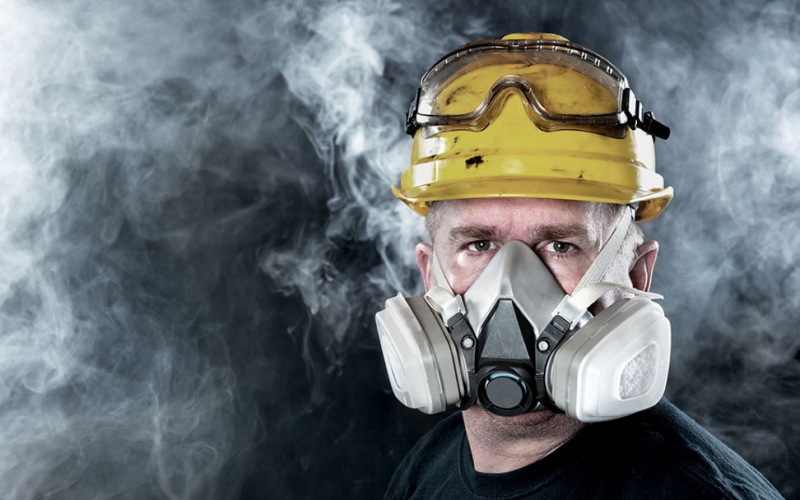
- Reusable Respirators (Half-Mask & Full-Face):
- More durable options with replaceable filters and cartridges.
- Provide protection against a wider range of hazards, including particulates, gases, and vapours, by using specific filter types.
- Full-face respirators also offer eye and face protection.
- Powered Air Purifying Respirators (PAPRs):
- These advanced systems provide a continuous flow of filtered air to the user, creating positive pressure within the headtop or mask.
- Offer enhanced comfort, especially for extended use, and can be suitable for users with facial hair or certain medical conditions that prevent tight-fitting mask use.
- Available with various headpieces (hoods, helmets, face shields) and filter options.
- Supplied Air Respirators (SARs):
- Deliver clean, breathable air from an external compressed air source.
- Essential for environments that are oxygen-deficient or immediately dangerous to life or health (IDLH), or where contaminant levels are extremely high.
Essential Considerations for Respiratory Protection
Selecting the right respiratory protection involves a careful assessment of several factors:
- Hazard Identification: Understanding the specific airborne contaminants (particulates, gases, vapours) and their concentrations.
- Risk Assessment: Determining the potential for exposure and the required level of protection (Assigned Protection Factor – APF).
- Work Environment: Considering factors like temperature, humidity, space constraints, and presence of other PPE.
- User Comfort and Fit: Ensuring the chosen RPE is comfortable for the wearer and achieves a proper seal, which is verified through fit testing.
- Maintenance & Care: Understanding the requirements for cleaning, storage, and replacement of parts or filters.
The Importance of Respirator Fit Testing
A respirator can only provide its intended level of protection if it forms a tight seal against the wearer’s face. Even the most advanced respirator will not protect if it doesn’t fit properly. Respirator fit testing is a critical requirement in many health and safety regulations and is essential for ensuring that each individual wearer receives the maximum protection from their chosen tight-fitting respirator.
During a fit test, trained personnel assess whether a specific make, model, and size of respirator provides an adequate seal to the wearer’s face. There are generally two types of fit testing:
- Qualitative Fit Testing (QLFT): A subjective test that relies on the wearer’s ability to detect a test agent (e.g., saccharin or Bitrex) while wearing the respirator.
- Quantitative Fit Testing (QNFT): An objective test that uses a machine to measure the amount of leakage into the respirator, providing a numerical “fit factor.”
Fit testing should be performed initially when a respirator is first issued, and typically on an annual basis thereafter, or whenever there’s a significant change in the wearer’s facial features (e.g., significant weight change, dental work)